Heads up: TerrierBeagleLab may earn a small commission from qualifying purchases made through links in this article, at no extra cost to you. We only recommend products we believe are genuinely useful for Jack Russell, Beagle, and Labrador owners.
Training gets much easier when owners stop trying to make a Beagle behave like a breed with very different instincts. Beagles are scent hounds. They are often independent, environmental, and deeply motivated by smells and food. When you understand that, a lot of so-called stubborn behavior starts to make sense. The goal is not to suppress hound instincts. It is to channel them into routines that work in real life.
Quick Answer
Working with a Beagle’s hound instincts means using scent, food, and structured independence as part of training instead of fighting those traits constantly. Beagles usually learn better when owners respect nose-led behavior, build stronger engagement gradually, and create legal outlets for sniffing and searching.
What Hound Instincts Look Like Day to Day
In daily life, hound instincts often show up as sniffing, tracking, selective attention outdoors, food focus, vocal alerting, and a tendency to keep moving toward interesting environmental information. These are not flaws. They are breed traits. Problems happen when owners interpret them as personal disobedience instead of instinctive behavior that needs structure.
Train Through the Nose, Not Around It
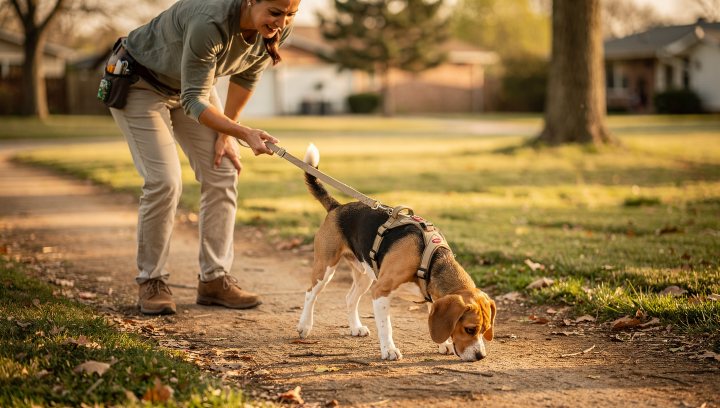
Scent can be a distraction, but it can also be a reward. Sniff walks, search games, scatter feeding, and structured nose work all help meet the breed’s needs. A Beagle that gets appropriate scent outlets is often easier to train in the rest of daily life.
Use Food Motivation Wisely
Beagles are often highly food motivated, which can be a huge advantage. Use that interest to build recall, loose-leash walking, engagement, and calm behaviors. The key is to use rewards strategically rather than turning food into background noise.
Keep Expectations Realistic Outdoors
A Beagle may respond perfectly in the house and struggle outside where the world is much more interesting. That is normal. Outdoor training needs to be built in smaller steps, often with long lines, higher-value rewards, and lower expectations at first.
Teach Connection in Short Bursts
Because hounds are so environmentally aware, short moments of connection matter. Reward check-ins, returning attention, and easy engagement. Those small repetitions create the relationship patterns that make harder training possible later.
What Owners Often Get Wrong
- expecting instant obedience around scent-heavy distractions
- withholding scent outlets and then wondering why the dog feels frantic
- using weak rewards in hard situations
- treating independence as defiance instead of a breed trait
Best Activities for Hound Minds
Sniff walks, scent games, find-it sessions, search boxes, food puzzles, and structured recall games are often better for Beagles than repetitive obedience drilling with no environmental relevance. This breed usually thrives when training feels practical and engaging.
Final Takeaway
Working with a Beagle’s hound instincts is one of the smartest shifts an owner can make. When you stop fighting the breed’s design and start building training around it, your Beagle often becomes easier to understand, easier to motivate, and much easier to live with.