
Heads up: TerrierBeagleLab may earn a small commission from qualifying purchases made through links in this article, at no extra cost to you. We only recommend products we believe are genuinely useful for Jack Russell, Beagle, and Labrador owners.
Off-leash training for Jack Russells is one of those topics where optimism can outpace common sense. This breed is fast, prey-driven, and often highly confident about making its own choices. That does not mean off-leash work is impossible. It means it should be treated as an advanced safety skill, not a casual weekend experiment.
Quick Answer
Off-leash training for Jack Russells should start with strong recall on a long line, consistent engagement around distractions, and honest evaluation of prey drive, environment, and the individual dog’s reliability. In many cases, secure fenced spaces or long-line freedom remain the smartest option even for well-trained terriers.
Why This Breed Needs Extra Caution
Jack Russells are small, but they are extremely fast and often intensely interested in movement. Wildlife, running animals, fast bicycles, and exciting environments can override training quickly. That means off-leash privilege has to be earned through repeated success, not assumed because the dog recalls well in the backyard.
Start With Long-Line Reliability
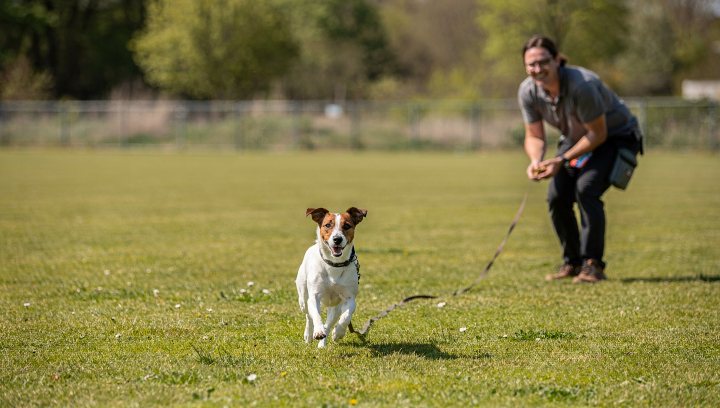
A long line lets you test how your Jack Russell handles freedom while still protecting against major mistakes. Before you even think about true off-leash work, your dog should be able to respond repeatedly around mild distractions, recover from environmental excitement, and stay engaged without constant begging from you.
Build the Right Foundation Skills
- fast recall
- emergency recall
- name response
- check-ins during movement
- leave it and disengagement from low-level distractions
These skills matter because off-leash safety depends on more than just “come.” It depends on your dog choosing connection before things escalate.
Choose Safe Environments
Fenced fields, enclosed dog-sport spaces, and secure private areas are much better starting points than open trails with wildlife or roads nearby. If the environment is too tempting or too dangerous, it does not matter how confident you feel about the dog’s training.
Use High-Value Rewards Even If the Dog “Knows It”
Jack Russells often need a strong reason to choose you over the environment. Continue paying well for excellent recalls and quick check-ins. Reliability stays stronger when the dog has a long history of good outcomes for returning to you.
Know When Off-Leash Is Not Realistic
Some terriers can handle limited off-leash time in specific safe areas. Others are simply too prey-driven or too environmentally intense to make it a smart choice. That is not a training failure. It is responsible decision-making.
Common Off-Leash Mistakes
- testing too early because the dog did well a few times
- using open areas with strong wildlife pressure
- forgetting that adolescence can reduce reliability
- allowing the dog to rehearse self-rewarding chases
Final Takeaway
Off-leash training for Jack Russells should be approached as a careful risk-management project, not a badge of honor. For some dogs, true off-leash work becomes possible in limited settings. For others, long lines and secure areas remain the better path. The safest goal is not freedom at any cost. It is freedom that still protects the dog.