Heads up: TerrierBeagleLab may earn a small commission from qualifying purchases made through links in this article, at no extra cost to you. We only recommend products we believe are genuinely useful for Jack Russell, Beagle, and Labrador owners.
Retrieving is one of the reasons many people love Labradors, but a dog that wants to pick up every sock, shoe, toy, towel, and random object in reach quickly becomes a household management problem. The goal is not to erase retrieving instinct. It is to teach better rules around what is fair game, when fetching happens, and how impulse control fits into daily life.
Quick Answer
Training a Labrador not to retrieve everything starts with preventing access to tempting items, teaching leave it and drop, building calmer fetch rules, and rewarding the dog for choosing approved objects. Most Labs improve when owners make household boundaries clearer instead of only reacting after the dog has already grabbed something.
Why Labradors Grab So Much
Labradors are mouthy by nature. Many enjoy carrying, retrieving, and investigating objects. Puppies and adolescents often do this even more because the behavior is fun, self-rewarding, and gets attention. If grabbing items leads to chasing games or interactive drama, the habit becomes stronger.
Start With Management
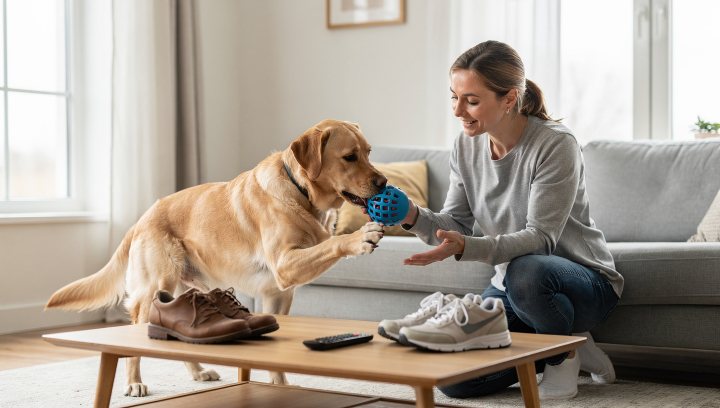
If shoes, towels, children’s toys, and laundry are always available, the dog gets constant practice making bad choices. Better management means fewer rehearsals and faster learning. Closed doors, tidy routines, baby gates, and keeping approved toys available all help.
Teach Leave It and Drop Separately
Leave it teaches your Labrador not to pick something up in the first place. Drop teaches the dog how to release an item already in the mouth. Both skills matter, and they should be taught in easy steps before being expected around favorite stolen objects.
Set Better Fetch Rules
Some Labs become grabby because retrieve-style games have no structure. Add simple rules: wait before the throw, return to you, release on cue, then get sent again. This keeps retrieving fun while teaching that you control when the game starts and what items belong in it.
Reward Approved Choices
If your dog picks up an approved toy instead of a shoe, notice that. Many owners are quick to respond to mistakes but quiet about good choices. Labs often learn faster when the right mouth behavior gets reinforced too.
Do Not Turn It Into a Chase Game
Chasing a Labrador that stole an object can make the behavior more fun, not less. When possible, trade calmly, cue drop, and prevent the pattern from becoming an exciting running game around the house.
Common Mistakes
- leaving tempting objects everywhere
- playing unstructured fetch constantly
- only teaching drop and not leave it
- rewarding theft with high-energy attention
Final Takeaway
Training a Labrador not to retrieve everything is really about shaping the retrieving instinct into something useful. With better boundaries, calmer games, and clear impulse-control skills, most Labs can learn that not every object in the house is part of their job.