
Heads up: TerrierBeagleLab may earn a small commission from qualifying purchases made through links in this article, at no extra cost to you. We only recommend products we believe are genuinely useful for Jack Russell, Beagle, and Labrador owners.
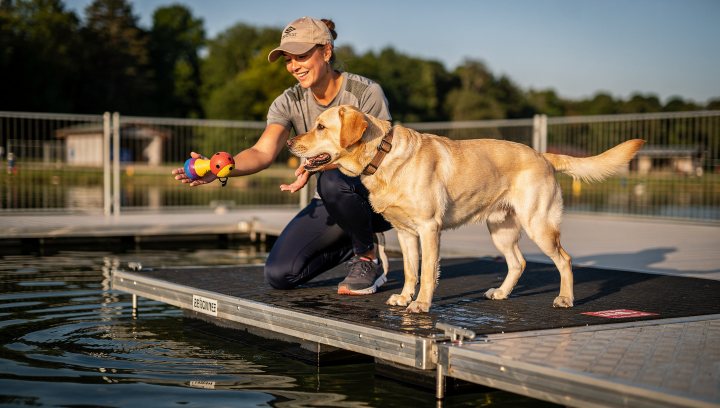
Dock diving can be a great match for many Labradors because the sport combines retrieving, water confidence, and athletic movement. But beginner work should be about safety and confidence, not forcing a dramatic jump. A dog that loves the water still needs a clear introduction to the dock, the toy, and the overall game.
- Quick Answer
- Why Labradors Often Enjoy Dock Diving
- Start With Water Confidence
- Build Toy Motivation
- Introduce the Dock Slowly
- Use Positive, Low-Pressure Repetitions
- Safety Basics Matter
- Who Should Go Slowly?
- What If My Dog Will Swim but Not Jump?
- Keep Sessions Fun and Brief
- Why Dock Diving Can Be Useful Beyond Sport
- Final Takeaway
Quick Answer
Labrador dock diving for beginners should begin with water comfort, toy motivation, and safe introductions to the dock environment. The first goal is helping your dog feel confident moving on and off the dock and understanding the game, not chasing maximum distance right away.
Why Labradors Often Enjoy Dock Diving
Many Labs already like water, retrieving, and working with people, which gives them a natural starting point for this sport. Even so, not every Labrador loves every water activity automatically. Confidence still has to be built thoughtfully.
Start With Water Confidence
If your dog is not already happy around water, begin there. Calm swimming, shallow water play, and short retrieve games in safe conditions are better starting points than launching straight into a dock environment.
Build Toy Motivation
Dock diving usually works best when the dog is excited to chase a toy. Practice strong retrieve and chase games on land first. If your dog is only mildly interested in toys, spend time increasing value before expecting much enthusiasm on the dock.
Introduce the Dock Slowly
Let your dog walk on the dock, look around, and leave again calmly. Reward curiosity and confidence. Some dogs need time to get used to the texture, height, or sound of the platform before they feel ready to jump.
Use Positive, Low-Pressure Repetitions
Early sessions should feel easy. A short run, a visible toy, and a simple success are enough. Avoid crowding the dog or creating pressure around the edge. Confidence is more valuable than distance at this stage.
Safety Basics Matter
- use a safe, well-run facility if possible
- watch footing on wet surfaces
- warm up with light movement first
- avoid too many repeated jumps in one session
- consider a properly fitted life jacket for certain situations
Who Should Go Slowly?
Puppies, dogs with joint concerns, overweight dogs, and dogs with low water confidence all need a more gradual approach. Even a strong adult Lab benefits from sensible progressions.
What If My Dog Will Swim but Not Jump?
That is common. Swimming comfort and dock confidence are related but not identical. Go back a step. Reward movement toward the edge, easy toy chases, and calm exploration. Do not turn hesitation into pressure.
Keep Sessions Fun and Brief
For most beginner dogs, a few successful repetitions are enough. Stop while your Labrador is still eager. Ending on a good note helps the dog return to the activity with confidence next time.
Why Dock Diving Can Be Useful Beyond Sport
For the right dog, dock diving can become a powerful enrichment outlet. It gives many Labradors a structured way to combine water, retrieving, focus, and physical effort in a way that feels naturally rewarding.
Final Takeaway
Labrador dock diving for beginners should feel safe, clear, and confidence-building. When you start with water comfort, good toy motivation, and gradual exposure, many Labs take to the sport naturally and enjoy it as a fun working outlet.