
Heads up: TerrierBeagleLab may earn a small commission from qualifying purchases made through links in this article, at no extra cost to you. We only recommend products we believe are genuinely useful for Jack Russell, Beagle, and Labrador owners.
Agility is a natural fit for many Jack Russells because it combines movement, focus, and fast learning. But beginner agility should not start with rushing through obstacles. It should start with body awareness, confidence, handling basics, and safety. A good foundation makes the sport more fun and much more useful for real-life behavior too.
Quick Answer
Jack Russell Terrier agility training for beginners should start with focus work, body awareness, low-impact obstacle introductions, and short sessions that keep the dog confident. The best early goal is not speed. It is learning how to work with you safely and enthusiastically.
Why Agility Suits Jack Russells
This breed is quick, clever, athletic, and often highly motivated by movement and games. Those traits make agility appealing, but they also mean owners need to avoid turning the sport into chaotic over-arousal. Good agility training sharpens control as much as speed.
Start With Foundation Skills
- name response and engagement
- hand targets
- following body movement
- staying near your side briefly
- confidence stepping on different surfaces
These skills make obstacle work much easier later on.
Introduce Equipment Gradually
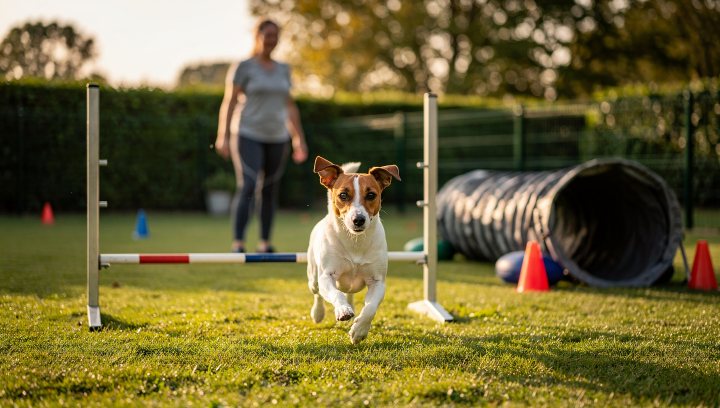
For beginners, think low jumps, tunnels, cones, wobble awareness on safe surfaces, and simple ground poles. Keep heights low and surfaces secure. Many young or inexperienced dogs need confidence before they need challenge.
Focus on Body Awareness
Backing up, stepping over poles, balancing on safe platforms, and turning around cones are all excellent beginner exercises. They teach the dog to think about where the body is moving, which helps prevent sloppy, frantic performance later.
Use Short Sessions
Most Jack Russells learn best in short, upbeat bursts. Five minutes of successful work is often more valuable than twenty minutes that ends with frustration or reckless speed.
Reward Control, Not Just Speed
Because this breed is naturally fast, it is easy to admire speed and accidentally ignore impulse control. Reward waiting, checking in, following cues, and recovering calmly between obstacles. Those habits matter just as much as enthusiasm.
Do Not Rush Young Dogs
Puppies and still-growing adolescents should avoid intense jumping, hard impact, and repetitive strain. Focus on skills, confidence, and low-impact basics until your dog is physically ready for more.
Home Practice Ideas
- ground poles in a straight line
- low cones for circling
- short tunnel introductions
- platform work for front feet and rear awareness
- easy sequences of two or three simple tasks
Common Mistakes
- starting with equipment before foundation skills
- making sessions too long
- letting excitement replace control
- using unsafe or slippery surfaces
- asking young dogs for adult-level impact
Why Agility Helps Beyond Sport
Even casual agility-style training can improve focus, confidence, and communication. For many Jack Russells, it becomes a powerful outlet that reduces boredom and gives the dog a structured job.
Final Takeaway
Jack Russell Terrier agility training for beginners works best when you build a smart foundation first. Confidence, body awareness, and teamwork create a dog that can enjoy the sport safely and carry those benefits into everyday life too.