Heads up: TerrierBeagleLab may earn a small commission from qualifying purchases made through links in this article, at no extra cost to you. We only recommend products we believe are genuinely useful for Jack Russell, Beagle, and Labrador owners.
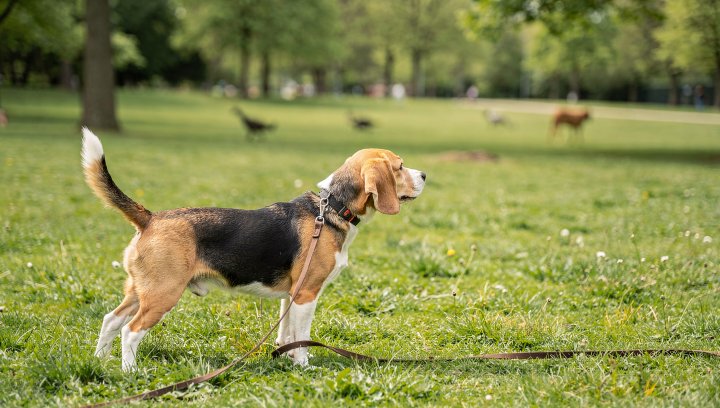
Beagles chase because they are built to follow movement and scent. That does not make the behavior harmless, and it does not mean you are stuck with it forever. The goal is to reduce opportunities for uncontrolled chasing, build stronger engagement, and give the dog safer ways to use those same instincts.
- Quick Answer
- Why Beagles Chase
- Step 1: Stop Giving the Behavior Free Rehearsal
- Step 2: Improve Attention Before Triggers Get Strong
- Step 3: Build Better Recall Foundations
- Step 4: Give the Nose a Job
- Teach Pattern Games for Self-Control
- What to Do in the Moment
- Common Mistakes
- Is Chasing Ever Fully Fixable?
- A Safer Daily Strategy
- Final Takeaway
Quick Answer
To stop a Beagle from chasing everything, manage the environment with leashes or long lines, strengthen recall and attention skills, and give your dog structured scent outlets that satisfy hound instincts without rewarding the chase itself. The key is control before freedom.
Why Beagles Chase
Movement and scent are naturally rewarding to many Beagles. A squirrel running, a rabbit scent trail, a blowing leaf, or even a jogger can trigger fast pursuit. Chasing is exciting, self-reinforcing, and often happens before the owner has time to react. That is why prevention matters so much.
Step 1: Stop Giving the Behavior Free Rehearsal
If your Beagle regularly practices chasing in the yard, on walks, or in open spaces, the habit stays strong. Use a leash, harness, fenced areas, or long line when needed. This is especially important while you are building new skills.
Step 2: Improve Attention Before Triggers Get Strong
Many owners wait until the Beagle is already locked onto the target. At that point, success is much harder. Practice engagement in low-distraction spaces first. Reward eye contact, name response, hand targets, and easy check-ins. Then begin using those skills when mild distractions appear at a safe distance.
Step 3: Build Better Recall Foundations
Reliable recall is one of your best tools against chasing. Practice with a long line, rewarding heavily for fast returns. Do not save recall only for emergencies. Make it part of regular walks and training sessions so the behavior stays strong.
Step 4: Give the Nose a Job
Trying to stop a Beagle from ever following scent is unrealistic. A better approach is to create controlled scent opportunities. Nose work games, sniff walks, scatter feeding, scent boxes, and snuffle mats let your dog use natural hound skills in ways that are safe and productive.
Teach Pattern Games for Self-Control
Simple pattern games can help a Beagle respond more automatically around distractions. A predictable reward pattern, check-in game, or “find it” scatter on cue can interrupt rising chase interest before it turns into full pursuit.
What to Do in the Moment
If your dog spots something and starts to lean into the chase, create distance right away if possible. Turn, move away briskly, and use your practiced cues before arousal spikes higher. If your dog is already lunging hard, focus on safe management rather than trying to squeeze in formal learning during that exact moment.
Common Mistakes
- Trusting off-leash freedom too early.
- Using recall only after the dog is already fully triggered.
- Assuming daily walks replace scent enrichment.
- Practicing too close to wildlife or heavy distractions.
- Expecting a Beagle to “just ignore it” without training history.
Is Chasing Ever Fully Fixable?
Sometimes it becomes very manageable. In some dogs, especially around wildlife, it remains a behavior that requires lifelong management. That is not failure. Responsible handling is part of living with a scent hound.
A Safer Daily Strategy
Use a long line in open areas, build recall several times each week, add one scent game at home every day, and reward calm check-ins generously on walks. Over time, those habits make chasing less automatic and owner engagement more rewarding.
Final Takeaway
If you want to stop a Beagle from chasing everything, start with management and build outward from there. This is not about eliminating instinct. It is about teaching your dog safer, more controlled ways to use it while strengthening the skills that matter most in real life.