Heads up: TerrierBeagleLab may earn a small commission from qualifying purchases made through links in this article, at no extra cost to you. We only recommend products we believe are genuinely useful for Jack Russell, Beagle, and Labrador owners.
Labrador chewing problems usually grow from a simple combination: strong mouths, high energy, boredom, teething, and too much unsupervised access to the house. The solution is rarely one magic toy. It is usually a better routine that makes good choices easier than bad ones.
- Quick Answer
- Why Labradors Chew So Much
- Step 1: Remove the Easy Targets
- Step 2: Give Better Chew Options
- Step 3: Watch Your Dog’s Energy Pattern
- Step 4: Interrupt Early, Redirect Fast
- What if My Labrador Chews When Left Alone?
- A Chewing Prevention Routine
- Common Owner Mistakes
- When Chewing Might Signal a Bigger Issue
- Final Takeaway
Quick Answer
If you want Labrador destructive chewing problems solved, reduce free access to tempting items, provide better legal chew options, increase enrichment, and supervise consistently while teaching what belongs to the dog and what does not. Most Labradors improve when owners stop treating chewing as rebellion and start treating it as a management and outlet issue.
Why Labradors Chew So Much
Labradors explore with their mouths. Puppies chew because they are teething and learning about the world. Adolescents chew because they are energetic and impulsive. Adults may chew because of boredom, stress, or habits that were never interrupted early. When a Labrador has time, energy, and access, chewing becomes easy self-entertainment.
Step 1: Remove the Easy Targets
Shoes, remote controls, kids’ toys, blankets, and laundry are all common victims because they are available. If the dog keeps finding household items, the environment is part of the problem. Use gates, pens, crates, closed doors, tidy routines, and leashes indoors when needed.
Step 2: Give Better Chew Options
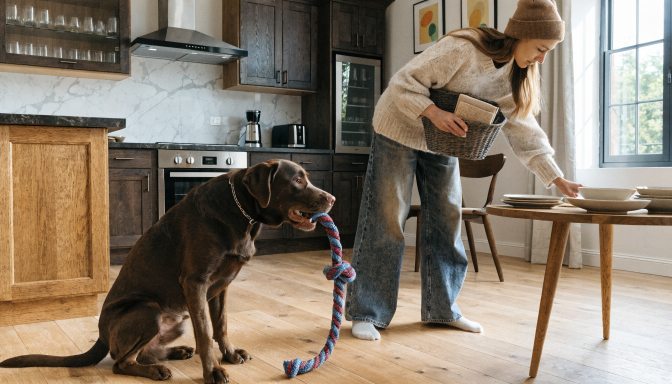
Appropriate chew outlets matter, but they need to be safe, durable, and interesting enough to compete with stolen objects. Rotate toys so they stay novel. Use food-stuffed toys, frozen enrichment options, and long-lasting legal chews your dog handles safely.
Think of chew options as part of the daily plan, not an emergency response after your dog grabs something expensive.
Step 3: Watch Your Dog’s Energy Pattern
Many Labs chew most when they are under-exercised or under-stimulated. That does not mean nonstop running is the answer. A better mix is physical activity plus mental work. Walks, retrieve games with rules, training sessions, sniff opportunities, and food puzzles all help.
Step 4: Interrupt Early, Redirect Fast
If you catch your Labrador chewing the wrong item, stay calm. Swap for a legal chew, then reward the correct choice. The goal is not to create a chase game. It is to teach a repeatable pattern: household item leaves, approved item appears, calm chewing continues.
What if My Labrador Chews When Left Alone?
If destruction happens mainly during absences, look closely at whether your dog is bored, under-exercised, or uncomfortable being alone. Some chewing is simple opportunity. Some is stress-related. A dog that only destroys the house during departures may need independence work in addition to better chew management.
A Chewing Prevention Routine
- Morning potty break and movement.
- Short obedience or engagement session.
- Breakfast in a puzzle feeder.
- Supervised free time with a legal chew.
- Midday enrichment or walk.
- Evening calm chew or stuffed toy before rest time.
Routine reduces the random boredom windows where destruction usually begins.
Common Owner Mistakes
- Giving too much freedom too soon.
- Offering low-value chews that cannot compete.
- Only reacting after damage is done.
- Assuming physical exercise alone will solve everything.
- Turning item removal into a fun chase.
When Chewing Might Signal a Bigger Issue
If your Labrador is frantically shredding walls, doors, or crate areas, especially around departures, the problem may go beyond normal chewing. In that case, it is worth looking at anxiety, panic, or serious frustration patterns with a qualified professional.
Final Takeaway
Labrador destructive chewing problems are usually solved through prevention, structure, and better outlets rather than punishment. Labs are strong, busy dogs, and chewing is easy reinforcement. When you make the right choice easier and more rewarding, the wrong choice starts showing up much less often.