Heads up: TerrierBeagleLab may earn a small commission from qualifying purchases made through links in this article, at no extra cost to you. We only recommend products we believe are genuinely useful for Jack Russell, Beagle, and Labrador owners.
Loose-leash walking is one of the most useful real-life skills a Labrador can learn, but it is also one of the easiest places for owners to accidentally rehearse bad habits. Labs are strong, social, and often excited by movement, people, and smells. If pulling keeps getting them where they want to go, the behavior becomes self-reinforcing fast. The good news is that polite walking is trainable when the dog gets clear rules, good timing, and enough practice in realistic steps.
Quick Answer
To teach your Labrador to walk politely on a leash, reward the position you want, stop reinforcing pulling, keep sessions short enough for success, and work through distractions gradually instead of expecting perfect walking everywhere at once. Most Labs improve when owners focus on timing and consistency more than force.
Why Labradors Pull So Much
Labradors often pull for simple reasons. They are enthusiastic, physically strong, and usually motivated by people, smells, movement, and forward progress. If pulling makes the walk continue, the dog learns that leaning into the leash works. That is why polite leash walking is not just about gear. It is about changing the dog’s success pattern.
Start With the Right Setup
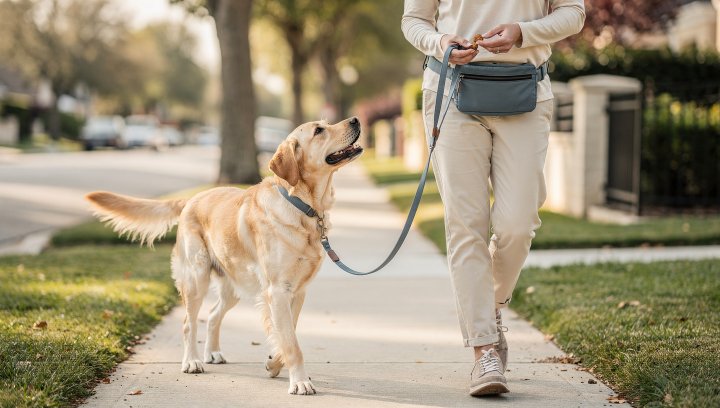
Use a comfortable harness or walking setup that gives you control without restricting natural movement. Keep rewards easy to access. A treat pouch helps a lot because fast reward delivery matters with Labs. Try to begin in a space where your dog can actually think, not the busiest sidewalk in the neighborhood.
Define What “Polite” Means
For most owners, polite walking means the leash stays loose most of the time, the dog can move with interest, and you are not being dragged from one distraction to another. It does not mean the dog has to heel with military precision on every casual walk. Clear, realistic expectations make training much easier.
Reward the Position You Like
If your Labrador is near you with a loose leash, reward that moment. Do not wait until the dog forges ahead and then only react to the mistake. Good loose-leash walking is built by paying attention to the correct moments early and often.
Use a Stop-and-Reset Pattern
When the leash goes tight, stop moving. Once your Lab reorients, releases tension, or comes back toward you, mark and continue. This teaches the dog that pulling stalls progress while calm movement restarts it. It can feel repetitive at first, but consistency matters more than speed.
Change Direction Before Things Fall Apart
Many Labs pull hardest when they lock onto a distraction and build momentum. Instead of waiting until you are already bracing against the leash, turn early, call your dog back into the walk, and reward reconnection. Early intervention is much easier than trying to outmuscle a fully committed puller.
Practice in Layers
- Start in the house or yard.
- Move to a quiet sidewalk or driveway.
- Add low-level distractions.
- Build toward busier environments gradually.
This matters because many dogs look trained in calm places and completely forget the skill in real-world excitement. That does not mean the dog is stubborn. It means the training needs more layers.
Use Food Strategically
Labs are often highly food motivated, which is helpful if you use it well. You do not need to feed constantly forever, but early on, rewards should come often enough that staying connected to you feels worthwhile. As your dog improves, you can vary the reward schedule and use environmental rewards such as moving forward or reaching a sniff spot after a few good steps.
Common Owner Mistakes
- starting in environments that are too distracting
- only reacting after the dog is already pulling hard
- expecting one tool to fix the whole problem
- walking too far for the dog’s current skill level
- being inconsistent about whether pulling works
A Simple 10-Minute Practice Plan
Spend two minutes warming up with check-ins. Practice a few short loose-leash stretches in a quiet area. Reward often. Turn away from growing distractions. End while your Labrador is still succeeding. A short, effective session is more useful than a long, frustrating walk full of pulling.
Final Takeaway
If you want to teach your Labrador to walk politely on a leash, focus on building the pattern you want instead of only correcting the pattern you dislike. Labs usually learn fast when the walking rules are consistent, the rewards are clear, and the environment is introduced in manageable steps.