
Heads up: TerrierBeagleLab may earn a small commission from qualifying purchases made through links in this article, at no extra cost to you. We only recommend products we believe are genuinely useful for Jack Russell, Beagle, and Labrador owners.
A good Labrador Retriever crate training guide should make the crate feel safe, useful, and normal. The crate is not there to isolate your dog for convenience. It is a management and rest tool that supports potty training, safety, and calmer routines when introduced properly.
- Quick Answer
- Why Crate Training Helps Labradors
- Choose the Right Crate
- How to Introduce the Crate
- What to Put in the Crate
- How Long Should a Labrador Stay in the Crate?
- What if My Lab Whines in the Crate?
- Nighttime Crate Training Tips
- How to Avoid Common Crate Mistakes
- A Sample Crate Routine for a Young Lab
- When the Crate Becomes Helpful for Life
- Final Takeaway
Quick Answer
To crate train a Labrador Retriever, choose the right crate size, introduce it gradually with food and calm repetition, keep early sessions short, and pair crate time with rest and routine instead of frustration. Labs often learn the crate well when owners avoid rushing the process.
Why Crate Training Helps Labradors
Labradors are social, energetic, and often mouthy as puppies. A crate gives you a safe place for naps, helps with house training, and prevents the dog from practicing destructive habits when supervision is limited. The key is to make the crate feel predictable and comfortable, not sudden or punishing.
Choose the Right Crate
Your Labrador should be able to stand up, turn around, and lie down comfortably. For puppies, many owners use a crate with a divider so the space can grow as the dog grows. Too much room can make potty training harder. Too little room makes the crate uncomfortable.
How to Introduce the Crate
Step 1: Let your dog explore
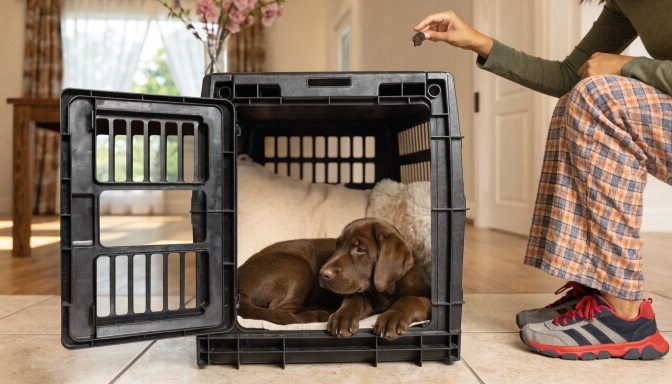
Place the crate in a common area. Leave the door open. Toss a few treats inside and let your dog walk in and out without pressure.
Step 2: Feed near or inside the crate
Meals build positive associations quickly. Some puppies are ready to eat fully inside the crate right away. Others need the bowl just outside the opening at first.
Step 3: Add short closed-door moments
Once your puppy enters comfortably, close the door for a few seconds while feeding or treating. Open it before your puppy becomes upset. Build duration slowly.
Step 4: Pair the crate with naps and calm periods
Many Labs settle more easily when crate time happens after potty breaks, light activity, and routine. Timing matters. A wildly energetic puppy is much less likely to relax.
What to Put in the Crate
Use safe bedding if your puppy does not shred it, water when appropriate, and long-lasting chews only if they are safe for your dog and you can supervise or know your dog handles them well. Keep the setup simple. Too many items can turn into chewing opportunities.
How Long Should a Labrador Stay in the Crate?
That depends on age, bladder control, and training history. Young puppies need frequent potty breaks and should not be expected to stay crated for long stretches. Adult dogs can often handle longer periods, but crates still should not replace exercise, enrichment, and human interaction.
What if My Lab Whines in the Crate?
First, check the basics: does your dog need the bathroom, movement, water, or a calmer setup? If those needs are met and the whining is mild protest, wait for a brief pause before opening the door so you do not reward noise. If the whining is escalating into panic, the process is moving too fast. Go back a step and rebuild comfort.
Nighttime Crate Training Tips
Place the crate near your bed at first if possible. Many puppies settle better when they can hear and smell their people. Keep nighttime potty breaks quiet and boring. Return the puppy to the crate with as little stimulation as possible.
How to Avoid Common Crate Mistakes
- Do not use the crate only when leaving the house.
- Do not force a fearful puppy inside.
- Do not let a young dog become frantic repeatedly in the crate.
- Do not expect the crate to fix under-exercise or boredom.
- Do not use the crate as punishment after every unwanted behavior.
A Sample Crate Routine for a Young Lab
Potty trip, breakfast, short play, short training, potty again, crate for a nap. Then repeat that general rhythm through the day. Puppies often do best with a predictable cycle of toilet, activity, and rest. The crate fits naturally into the rest part of that cycle.
When the Crate Becomes Helpful for Life
Even after puppyhood, crate training can remain valuable for travel, recovery after vet procedures, houseguests, and times when management is needed. A dog that sees the crate as familiar and safe is easier to support in many real-life situations.
Final Takeaway
This Labrador Retriever crate training guide comes down to one principle: make the crate a calm habit, not a battle. Build positive associations, go slowly, respect your dog’s age and needs, and use the crate as part of a healthy routine. For most Labs, that creates a useful lifelong skill.