
Heads up: TerrierBeagleLab may earn a small commission from qualifying purchases made through links in this article, at no extra cost to you. We only recommend products we believe are genuinely useful for Jack Russell, Beagle, and Labrador owners.
Leash reactivity in Jack Russells often looks intense because the breed is naturally quick, alert, and willing to broadcast big feelings with very little hesitation. But barking and lunging on leash are usually not signs that the dog is hopeless or mean. More often, they reflect arousal, frustration, fear, overexcitement, or a habit pattern that has been rehearsed too many times. Good leash reactivity training is about changing the dog’s emotional pattern and giving both dog and handler a better plan.
Quick Answer
Jack Russell leash reactivity training works best when you increase distance from triggers, reward calm engagement, avoid repeated blowups, and practice in setups where your dog can still think. Training becomes much harder if every walk turns into reactive rehearsal.
Why Jack Russells React So Fast
Jack Russells tend to notice movement quickly and respond intensely. That does not mean every reactive terrier is aggressive. Some react from frustration, some from fear, some from excitement, and some from a mix of everything. The barking and lunging may look similar from the outside, but your training still needs to prioritize emotional safety and predictable setups.
Distance Is One of Your Best Tools
If your dog explodes every time another dog appears across the street, you are probably training too close. Reactivity work improves when you find a distance where your Jack Russell can notice the trigger without tipping over into full barking and lunging. That calmer zone is where actual learning starts.
Teach a Simple Check-In Pattern
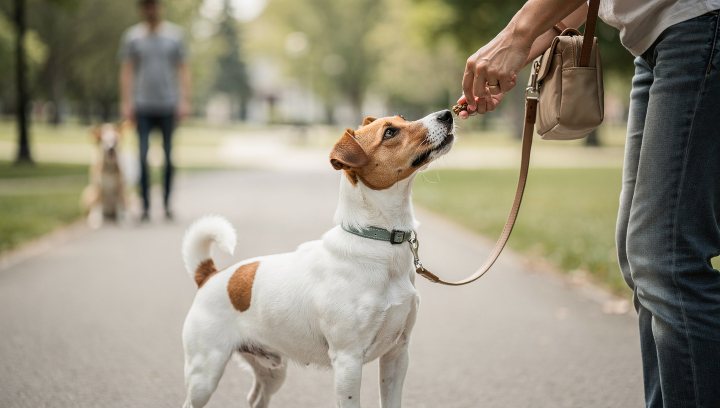
When your dog spots a trigger at a manageable distance, mark the moment of calm noticing and reward for turning back to you. Over time, your goal is for the dog to learn that seeing a trigger predicts looking to you, not charging into a reaction.
Use Smart Walking Management
- choose quieter routes when possible
- walk at off-peak times
- cross the street early instead of waiting too long
- use parked cars or visual barriers when needed
- keep sessions short enough that your dog stays successful
Management is not avoiding the problem. It is reducing unnecessary setbacks while new habits are being built.
Do Not Drill Obedience Through Panic
Many owners try to solve reactivity by forcing sits or repeated commands right in front of the trigger. Once the dog is fully over threshold, that usually does not teach much. Calm learning happens earlier. Your job is to work before the explosion, not during it.
Common Reactivity Mistakes
- walking too close to triggers too often
- punishing the outburst without changing the setup
- assuming the dog is being stubborn
- taking long stressful walks that stack frustration
- progressing faster than the dog can handle
What Improvement Usually Looks Like
Progress is often gradual. First, your dog notices the trigger and recovers faster. Then the distance needed gets smaller. Then the dog starts checking in before reacting. Full calm behavior comes after many repetitions, not one big breakthrough session.
When to Get Extra Help
If your Jack Russell is reacting strongly to many triggers, redirecting onto you, or becoming harder to manage despite your efforts, working with a qualified force-free professional can speed things up and reduce mistakes.
Final Takeaway
Jack Russell leash reactivity training is most effective when you lower the difficulty, manage the environment, and reward emotional recovery rather than just trying to suppress barking. With distance, timing, and consistency, many reactive terriers become far more manageable on walks.