
Heads up: TerrierBeagleLab may earn a small commission from qualifying purchases made through links in this article, at no extra cost to you. We only recommend products we believe are genuinely useful for Jack Russell, Beagle, and Labrador owners.
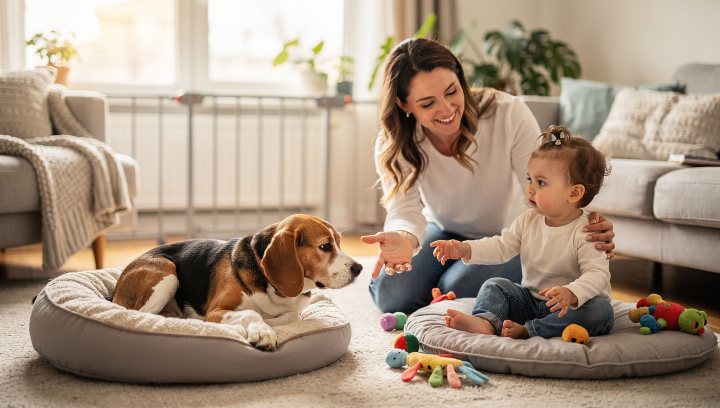
Beagles can be lovely family dogs, but safe life with toddlers depends on supervision, structure, and realistic expectations. A Beagle does not need to be aggressive to create a risky moment. Excitement, food interest, barking, rough handling, and crowding can all cause problems if adults assume things will work themselves out naturally.
Quick Answer
Beagles and toddlers can live together well when adults supervise closely, protect the dog’s space, prevent rough child handling, and build calm routines around food, rest, and greetings. Safety comes from management and teaching, not from assuming a friendly dog will always tolerate unpredictable toddler behavior.
Why This Combination Needs Structure
Beagles are usually social, but they are still dogs with boundaries, instincts, and moments of excitement. Toddlers are impulsive, loud, and physically uncoordinated. That combination can go well, but only when adults create clear rules for both sides.
Most Important Safety Rules
- Never leave the dog and toddler together unsupervised.
- Protect the dog during meals, chews, and rest time.
- Do not allow hugging, climbing, grabbing, or cornering.
- Create a dog-safe zone where the child cannot follow.
- Interrupt overstimulation early instead of waiting for a problem.
Watch the Beagle’s Triggers
Food is a big one. Many Beagles are highly food motivated, which means toddler snacks, dropped crackers, and highchair cleanup can all create tension or chaotic movement. Excitement around visitors or play can also lead to jumping, barking, or rushing behavior.
Teach the Toddler Simple Dog Rules
Even very young children can start learning gentle hands, no chasing, no taking food, and no bothering the dog when resting. Adults should model this constantly and keep expectations age-appropriate. Training the child is just as important as training the dog.
Teach the Beagle Household Skills Too
A Beagle living with toddlers benefits from mat training, calm greeting routines, leave-it work, and a reliable place to settle. These are not fancy extras. They are practical family-management tools.
Signs the Dog Needs a Break
- moving away repeatedly
- lip licking, yawning, or tension
- stiff posture
- avoidance or hiding
- escalating barking or restlessness
Do not wait for a growl to decide the dog is uncomfortable. Earlier signs matter.
Common Family Mistakes
- trusting a “good family dog” without supervision
- allowing the toddler to crowd the dog constantly
- ignoring food-related excitement
- assuming the dog should tolerate everything because it is friendly
Final Takeaway
Beagles and toddlers can absolutely do well together, but the safest homes are the ones where adults stay actively involved. Calm routines, protected dog space, and early intervention prevent many of the problems families mistakenly think come out of nowhere.