
Heads up: TerrierBeagleLab may earn a small commission from qualifying purchases made through links in this article, at no extra cost to you. We only recommend products we believe are genuinely useful for Jack Russell, Beagle, and Labrador owners.
A good Beagle walking schedule is not just about burning energy. It is about giving a scent-driven dog safe, structured opportunities to explore the world without becoming overstimulated. The right schedule changes with age, and getting that balance right helps with behavior, body condition, and day-to-day happiness.
Quick Answer
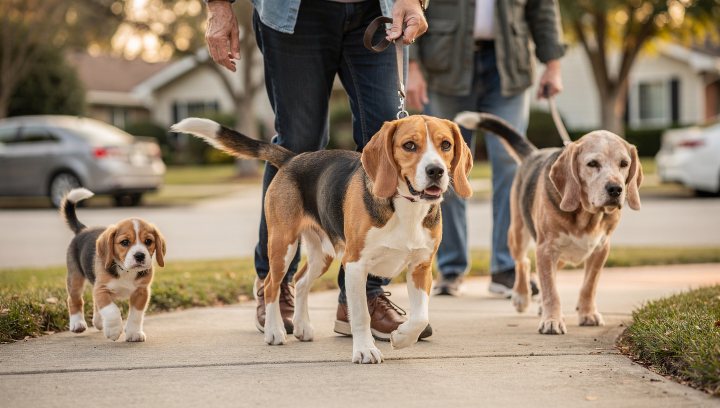
A Beagle walking schedule should change as your dog grows. Puppies need short, gentle outings and lots of rest. Adults usually do well with one or two meaningful walks plus extra scent and enrichment time. Seniors often benefit from shorter but steady walks that support mobility without causing fatigue.
Why Beagles Need More Than “Just a Walk”
For a Beagle, a walk is also a scenting session. That is one reason this breed often seems more tired after a slower sniff walk than after a brisk march around the block. Walking plans that allow safe sniffing usually satisfy the dog better than routines that focus only on distance or speed.
Beagle Puppies
Puppy walks should be short, positive, and designed for exposure rather than mileage. You are helping your puppy learn about surfaces, sights, sounds, leash handling, and calm exploration. Overdoing walks at this age can create physical strain and overtired behavior.
Adolescent and Adult Beagles
This is the stage where most owners need the most structure. Many adult Beagles do well with at least one longer walk and one shorter walk, plus time for sniffing, training, or enrichment. Dogs with strong drive may need more scent opportunities rather than simply more steps.
Senior Beagles
Older Beagles still benefit from daily walks because movement helps maintain weight, mobility, and emotional health. The difference is pace and recovery. Shorter routes, cooler temperatures, soft surfaces, and extra sniff time often suit seniors better than long, demanding outings.
How to Build a Better Walking Routine
- give your Beagle time to sniff instead of rushing every outing
- use a harness and comfortable leash setup
- choose quieter routes if your dog gets overstimulated
- mix walking with training and home enrichment
- adjust the plan for weather, health, and age
Signs the Walking Schedule Is Too Light
- boredom barking
- restless pacing
- pulling hard from excess excitement
- frantic indoor behavior
- constant seeking of scent or scavenging outlets
Signs It May Be Too Much
- slowing down unusually
- stiffness after walks
- irritability or overstimulation
- puppy meltdowns after outings
Remember That Beagles Need Mental Work Too
If your Beagle gets walks but still seems difficult at home, the missing piece may be scent games, training, or feeding enrichment. Walking helps, but it is only one part of the full routine for a hound breed.
A Simple Starting Template
Puppy: several tiny outings and short leash practice sessions. Adult: one substantial walk, one shorter walk, and a scent or training block. Senior: one or two shorter walks plus gentle enrichment and comfort-focused activity. Then adjust based on the individual dog.
Final Takeaway
The best Beagle walking schedule by age is one that supports physical health while respecting the breed’s scent-driven nature. When walks are age-appropriate, structured, and paired with sniffing and enrichment, they do a lot more than just burn off energy.