
Heads up: TerrierBeagleLab may earn a small commission from qualifying purchases made through links in this article, at no extra cost to you. We only recommend products we believe are genuinely useful for Jack Russell, Beagle, and Labrador owners.
Beagles are social dogs, and many puppies struggle when alone-time is introduced abruptly or inconsistently. Owners often do not realize they are accidentally creating panic patterns until whining, barking, and clinginess are already intense. Prevention is easier than repair. That does not mean forcing independence harshly. It means helping your Beagle puppy learn that short absences are safe, predictable, and not something to fear.
Quick Answer
Beagle puppy separation anxiety prevention starts with short, successful alone-time practice, calm departure routines, enrichment, and avoiding a pattern where the puppy only experiences alone-time once panic has already started. Build independence gradually and early.
Why Beagle Puppies Can Struggle
Beagle puppies are often people-oriented, vocal, and sensitive to routine changes. If they go from constant contact to sudden isolation, distress can build quickly. Puppies are not manipulative for crying. They are communicating discomfort, uncertainty, or a lack of coping skills.
Start With Tiny Absences
Begin with very short departures the puppy can handle. Step away for seconds, then return before distress escalates. That helps your puppy learn that separation happens and also ends safely. Starting too long is one of the biggest prevention mistakes.
Create Positive Alone-Time Associations
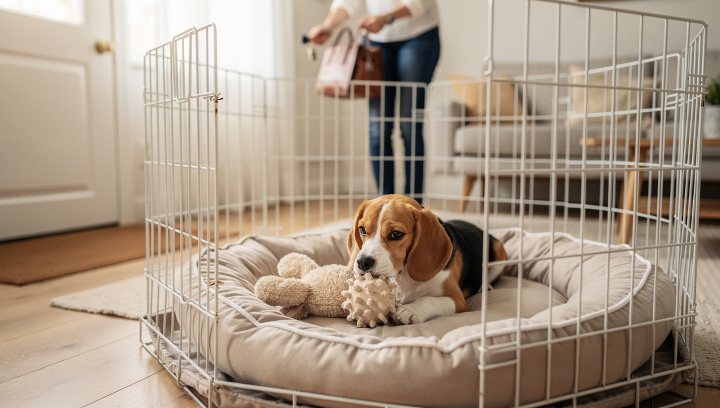
Offer a food toy, safe chew, or calming setup when your puppy has a brief independent session. Over time, alone-time should predict something pleasant and manageable rather than an emotional crash.
Do Not Make Departures Too Dramatic
Long emotional goodbyes often increase tension. Aim for calm, routine exits instead. The message should be that your comings and goings are normal, not high-stakes events.
Build Independence When You Are Home Too
Many owners create accidental clinginess by keeping the puppy in constant contact all day. Use gates, pens, naps, and short independent activities so your Beagle learns that being near but not attached to you is also safe.
Watch the Daily Pattern
If your puppy never practices alone except when you truly have to leave, you may end up testing rather than training. Planned practice sessions are usually gentler and more effective than waiting for real-world necessity.
Signs You May Be Moving Too Fast
- escalating vocalization
- scratching or frantic movement
- refusing enrichment when you leave
- difficulty settling even after you return
Common Prevention Mistakes
- jumping from zero alone-time to long absences
- using departures only when the puppy is already upset
- rewarding clinginess with constant access
- assuming the puppy will just get used to panic
Final Takeaway
Beagle puppy separation anxiety prevention is about teaching safety, not toughness. Short successful absences, calm routines, and early independence practice give your puppy a much better chance of handling alone-time well as it grows.