
Heads up: TerrierBeagleLab may earn a small commission from qualifying purchases made through links in this article, at no extra cost to you. We only recommend products we believe are genuinely useful for Jack Russell, Beagle, and Labrador owners.
Labradors are social dogs, which is one reason people love them. It is also one reason some of them struggle with being alone if independence is never taught. Preventing separation anxiety is easier than trying to fix full-blown panic later. The goal is to build comfort with short absences before your dog feels overwhelmed by them.
- Quick Answer
- Why Labradors Can Struggle With Being Alone
- Start With Independence Inside the Home
- Make Alone Time Gradual
- Keep Departures and Returns Low Drama
- Meet Needs Before Practicing Absences
- Use Safe Comfort Activities
- Watch for Early Warning Signs
- Common Mistakes
- What About Adult Labradors?
- When to Ask for Professional Help
- Final Takeaway
Quick Answer
Preventing separation anxiety in Labrador Retrievers means teaching calm alone time gradually, avoiding dramatic departures, building daily independence routines, and making sure your dog’s physical and mental needs are met before expecting relaxed absences. Prevention works best when it starts early and stays consistent.
Why Labradors Can Struggle With Being Alone
Labradors often love being close to people. That social temperament is wonderful, but it can create dependence if the dog never learns that short absences are normal and safe. Puppies that are always accompanied, or adult rescue dogs that have experienced disruption, may need extra help learning to settle alone.
Start With Independence Inside the Home
One of the best prevention steps is letting your Lab practice being calm without constant interaction, even while you are home. Use baby gates, mats, pens, or another room for short periods. Reward quiet relaxation. This teaches your dog that being near you is nice, but being separate is not a crisis.
Make Alone Time Gradual
Do not jump straight from constant company to long absences. Begin with very short departures: stepping outside for a few seconds, then one minute, then a few minutes, building slowly while your dog stays comfortable. If your Lab escalates into whining or frantic behavior, the step was too big.
Keep Departures and Returns Low Drama
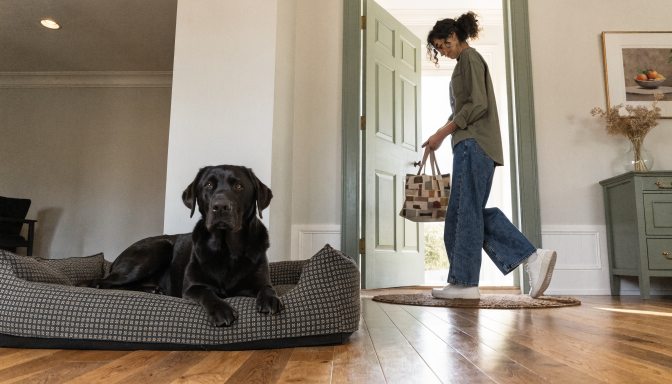
Big emotional goodbyes can unintentionally teach a dog that leaving is a major event. Try calmer routines instead. Pick up keys casually sometimes without leaving. Put on shoes and then sit back down. Return home in a calm, matter-of-fact way so your dog stops seeing those patterns as highly charged predictors.
Meet Needs Before Practicing Absences
A restless, under-exercised Lab is far less likely to settle. Before alone-time practice, use an appropriate mix of movement, sniffing, and mental work. The goal is not to exhaust the dog, but to make relaxation more realistic.
Use Safe Comfort Activities
Food-stuffed toys, scatter feeding in a snuffle mat, or a calm chew can help some Labs relax during short absences. These tools work best when the dog is already under threshold. They are support tools, not cures for panic.
Watch for Early Warning Signs
- constant shadowing of one person
- distress as soon as departure cues appear
- panting, pacing, drooling, or vocalizing during short absences
- destructive behavior focused on exits
- inability to settle when separated indoors
Spotting these signs early lets you slow down and adjust before the pattern deepens.
Common Mistakes
- Leaving a puppy or newly adopted dog alone too long too soon.
- Assuming crate training automatically solves distress.
- Using only physical exercise and ignoring emotional comfort.
- Rushing absences after a few good days.
What About Adult Labradors?
Prevention principles still help adult dogs. If your adult Lab is comfortable alone already, keep practicing low-key absences so the skill stays strong. If the dog is showing early signs of distress, treat it like a prevention issue immediately instead of waiting for it to turn into a bigger problem.
When to Ask for Professional Help
If your Labrador panics, injures itself, destroys exit points, or cannot handle even tiny separations, professional support is important. True separation anxiety is a serious welfare issue, and early guidance can make a major difference.
Final Takeaway
Preventing separation anxiety in Labrador Retrievers is really about teaching confidence and predictability. Start small, build independence into daily life, and make alone time boring, safe, and manageable. For many Labs, that steady approach protects one of the most important emotional skills they will ever learn.